Entrepreneurs often start by asking, “How much capital can I raise, then what business should I buy?”
In reality, the franchising model should come first—before the money.
In a mature and highly regulated market like Australia, your success or failure often depends less on how much you invest, and more on the strength and scalability of your model.
In this article, we’ll explain why prioritising your franchising model matters more than capital, break down model types, share real Australian examples, explore data trends, and offer practical steps to build or evaluate a model that can stand the test of time.
As our Director, Saumil Shah, says: “You need a robust model before chasing funding. Model first, finance second.”
What Is a Franchising Model?
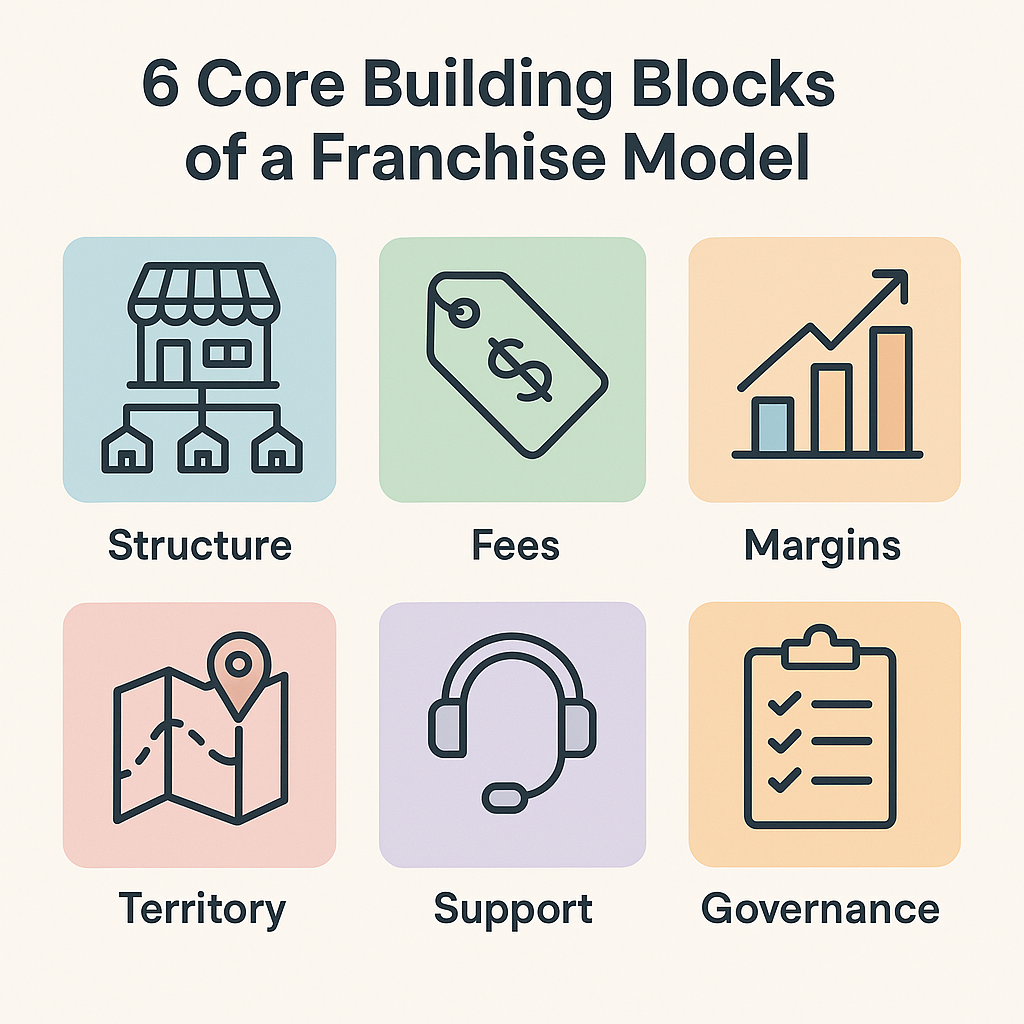
A franchising model is the blueprint that defines how your franchise will operate, scale, and generate profit. It includes:
- Structure (single-unit, multi-unit, master franchise, or area licensing)
- Fee and royalty system
- Profit splits, cost sharing, and supply margins
- Territory rights, exclusivity, and growth paths
- Support systems, training, and operations manuals
- Governance, reporting, and dispute resolution mechanisms
Your choice of model will influence your capital requirements, risk profile, and long-term performance.
Common Franchise Model Types
| Model Type | Description & Use Cases | Pros | Cons / Considerations |
| Single-unit franchise | One franchisee runs a single outlet | Simple structure, low complexity | Slower scale, limited leverage |
| Multi-unit franchise | Franchisee owns several outlets | Faster expansion, economies of scale | Greater operational risk |
| Area / territory licensing | Right to develop a defined region | Local investor control, fast rollout | Requires strong oversight |
| Master / sub-franchise | Master holds territory rights and sublicenses locally | Leverages local expertise | Complex revenue sharing |
| Hybrid / joint venture | Combination of franchised and company-owned units | Flexibility, shared control | Balancing internal vs external priorities |
The Australian Franchise Landscape
Understanding the broader environment helps you design a resilient franchise.
According to the 2023 State of Franchise Report by the Franchise Council of Australia (FCA), there are over 94,000 franchise outlets nationwide, employing nearly 600,000 Australians and contributing roughly AUD 174 billion to the economy.
The same report found that 36% of franchisors reported a revenue decline in 2023, and 66% identified rising interest rates as a major challenge.
Meanwhile, IBISWorld projects 1.7% revenue growth across the franchising sector by 2025, signalling modest but steady recovery.
On the regulatory side, the Franchising Code of Conduct, enforced by the Australian Competition and Consumer Commission (ACCC), requires franchisors to provide detailed disclosure, transparent financial models, and fair agreements.
The 2025 Code reforms introduce even stricter disclosure and termination rules, ensuring accountability from both franchisors and franchisees.
Given this maturity and regulation, a franchise in Australia cannot be treated like a “side hustle.” The model must withstand scrutiny from franchisees, banks, and regulators alike.
Australian Franchise Examples: Model Lessons
Let’s look at four standout Australian franchises and what their models teach us about sustainable growth.
DeckSeal
Sector: Timber and concrete restoration
DeckSeal’s model is built around low overheads and high mobility, with franchisees operating from home bases instead of commercial premises. This minimises startup costs and allows flexible territory expansion.
Key model strengths:
- Service-based, home-operated setup with minimal fixed costs
- State of the art marketing that keeps franchisees booked weeks and months in advance with jobs.
- Over 60% of the work is from repeat clients
- Centralised training and national marketing support
Lesson: DeckSeal shows how a lean service franchise can thrive by pairing efficiency with a repeatable system in a climate-driven market.
Coochie HydroGreen
Sector: Eco-friendly lawn and turf care (not Lawn Mowing).
Coochie HydroGreen’s model revolves around recurring revenue and subscription-based services, creating reliable cash flow for franchisees. Proprietary fertiliser formulas and centralised product supply reinforce quality and brand consistency.
Model highlights:
- Scheduled treatment programs that promote retention
- Business buy-back Guarantee by Franchisor – huge relief for franchisees looking to exit at any point.
- Income guarantee in the first year to provide cushion required initially.
- 1 month of training across operations, technical and importantly, unique sales & marketing strategies
- Scalable territories for owner-operators and multi-unit franchisees
Lesson: A systemised, repeatable process combined with environmental credibility builds long-term loyalty and strong franchise equity.
Coffee Treat Australia
Sector: An Unique coffee franchise
Coffee Treat Australia capitalises on the nation’s vibrant coffee culture by offering “Hole-in-the-wall” cafe concepts especially in the regional markets. Please read coffeetreat.com.au
Model features:
- Potential to run fully managed which suits anyone not intending to leave their fixed income
- Extensive training by the founder – month in existing store and additional month at their own store
- Mobile app ordering system for quick service
- Central supplier partnerships and barista training
Lesson: Aligning with lifestyle trends like convenience creates a low-barrier entry model with lifestyle appeal and high scalability.
Monsterball Amusements & Hire
Sector: Event and amusement hire
Monsterball operates under an asset-based model, where franchisees own inflatable and event equipment used across corporate, school, and council events.
Model features:
- High-margin event operations with broad client base
- Options to be an owner operator or run with team
- Centralised safety, compliance, and brand marketing
- Repeat contracts with institutions and seasonal clients
Lesson: Strong governance, compliance, and multi-stream income make this event-hire model both profitable and resilient.
Model Before Money: The Core Truth
Across these cases, one truth is clear: the strength of the model drives financial success—not the other way around.
You don’t start by saying, “I want 20% ROI.” You start by building a model that works, then let the numbers follow.
Why the Model Comes Before Finance
- Model is the skeleton; finance is the muscle
A weak framework collapses no matter how much capital you add. - Finance follows viability
Investors and lenders care about proven margins and replicable performance, not optimistic projections. - Avoid fatal flaws early
Clear modelling prevents future problems like overlapping territories or unrealistic royalties. - Better negotiation power
A defined model strengthens your hand when setting franchise fees or negotiating with funders. - Regulatory clarity
Compliance with the Franchising Code of Conduct requires clear, accurate disclosures grounded in a stable model.
Why Starting With Finance Can Be Risky
- Overleveraging: Debt amplifies weak structures.
- Misaligned incentives: Finance-led decisions often pressure franchisees.
- Scaling blind spots: Funding can mask poor operations or supply limits.
- Short-term bias: Chasing ROI may undermine brand longevity.
- Regulatory breaches: Misleading disclosures can attract ACCC penalties.
Finance without model discipline is like fuel without a car—it burns fast and goes nowhere.
How to Build or Evaluate a Franchise Model
- Prove your concept – Validate profitability and repeatability.
- Map your cost structure – Understand margins and break-even points.
- Select your model type – Choose between single-unit, area, or hybrid.
- Define your revenue streams – Set fair fees, royalties, and levies.
- Design territories – Ensure clear, scalable, non-overlapping areas.
- Create support systems – Build manuals, training, and QA processes.
- Prepare legal documents – Align with ACCC disclosure rules.
- Stress-test – Run worst-case financial and operational scenarios.
- Pilot first – Test with select franchisees before full rollout.
- Then seek finance – Approach investors with a proven, defendable model.
Trends Shaping Australian Franchising
- Digital integration: Franchisees expect CRM, automation, and e-commerce systems.
- Regulatory reform: The 2025 Franchising Code updates demand fairer terms and transparency.
- Omnichannel models: Combining retail, delivery, and digital services.
- Cost pressures: Rising wages and rent make lean models essential.
- Labour shortages: Simplified training systems and automation reduce dependency on skilled labour.
In this environment, a flexible, transparent model isn’t optional—it’s the foundation of survival.
Summary
- The model comes before money—always.
- Strong models define scalability, compliance, and sustainability.
- Australia’s regulated market demands clarity and system strength.
- Test, refine, and validate your model before raising capital.
As Growth Hive’s Saumil Shah puts it: “Model first, finance second.”
If you’d like help assessing your franchise model or exploring opportunities backed by proven systems, check out our Growth Hive Franchise Listings or join the Franchise & Business in Australia community.